



Every pathway is about manipulating human behavior to accept unelected globalist policies: perspective
The United Nations Global Environment Outlook regurgitates the great reset agenda by calling to reshape the global economy and society while pushing to reduce meat consumption by 50 percent and encouraging diets consisting of plants and fake, lab-grown meat.
Last month the United Nations Environment Program (UNEP) published the seventh edition of its Global Environment Outlook, subtitled “A Future We Choose.”
The 1,242-page report highlights five interconnected pathways in which the UN wishes to reset the world — “all backed by behavioral, social, and cultural shifts.”
“We need interlinked, whole-of-society and whole-of-government approaches to reshape economy and finance, materials and waste, energy, food and, of course, the environment. This new journey begins with moving beyond GDP as a measure of economic well-being […]
UNEP Executive Director Inger Andersen, “A Future We Choose,” December 2025
“It continues with a transition to circular economy models that reduce material footprints; a rapid decarbonization of the energy system; a shift towards sustainable diets, reduced waste and improved agricultural practices; and expanding protected areas and restoring degraded ecosystems – all backed by behavioral, social and cultural shifts.”
The UN’s five pathways to a great reset of the planet include:
- Transforming economic and financing systems away from shareholder capitalism towards stakeholder capitalism enforced by ESG scoring.
- Implementing a circular economy where people don’t own things but rather rent everything as a service.
- Transforming the food system to make us eat alternative proteins like insects and fake, lab-grown meat.
- Transforming the global energy system so the people have unreliable wind and solar while the so-called elite get nuclear for their AI data and surveillance centers.
- Managing environmental systems by monitoring, tokenizing, and financializing biodiversity while putting prices on water, air, and soil.
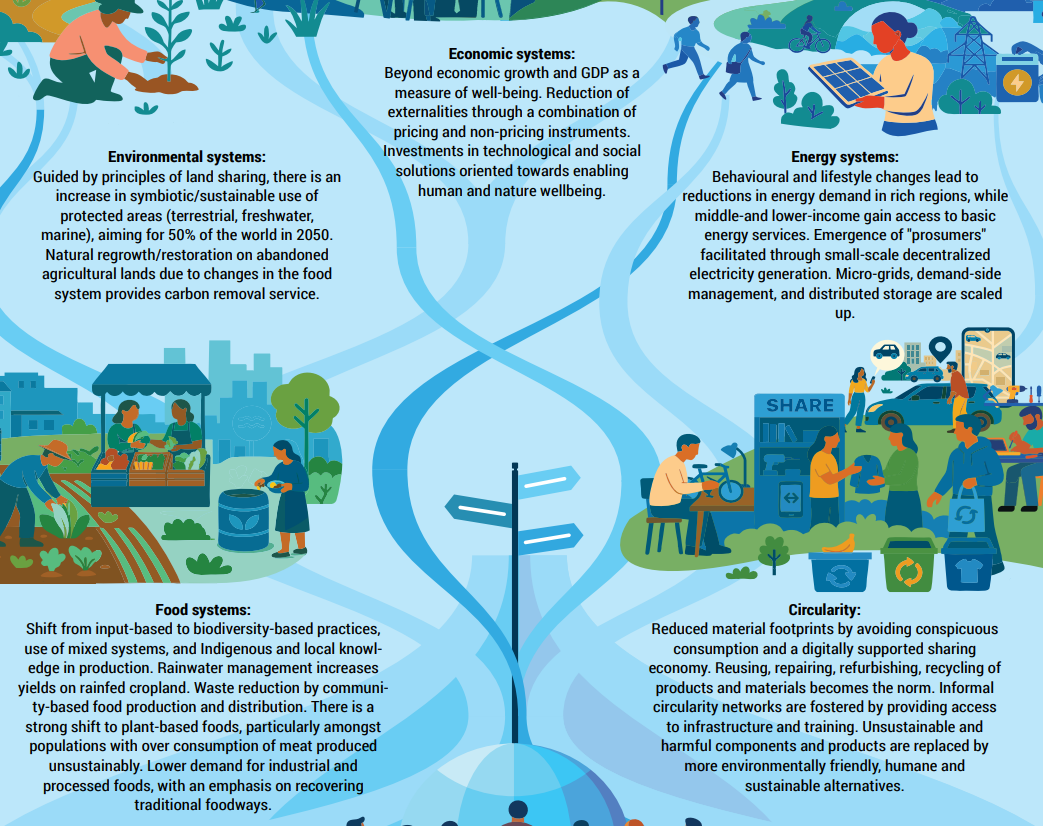
Here’s what the report has to say about the five pathways.
Transformation of economic and financing systems
This first step mirrors what World Economic Forum (WEF) founder Klaus Schwab said when he declared, “We need a great reset of capitalism,” in June, 2020.
According to the UN report, “Economic and financial systems must evolve by phasing out socially and environmentally harmful substances, pricing externalities such as pollution, moving beyond Gross Domestic Products as the sole measure of progress, and redirecting financial flows towards sustainability.”
“In developing regions, international financing can enable leapfrogging to sustainable models, with equity ensured through compensatory mechanisms for vulnerable populations.”
Sustainable finance, according to the UN, “is the process of taking environmental, social, and governance (ESG) principles into account when making investment decisions in the financial sector.”
Now, compare that with what Schwab wrote about the great reset agenda in 2020:
“To achieve a better outcome, the world must act jointly and swiftly to revamp all aspects of our societies and economies, from education to social contracts and working conditions. Every country, from the United States to China, must participate, and every industry, from oil and gas to tech, must be transformed. In short, we need a ‘Great Reset’ of capitalism.”
Klaus Schwab, Now is the Time for a Great Reset, June 2020
“Rather than using [COVID recovery] funds, as well as investments from private entities and pension funds, to fill cracks in the old system, we should use them to create a new one that is more resilient, equitable, and sustainable in the long run.
“This means, for example, building “green” urban infrastructure and creating incentives for industries to improve their track record on environmental, social, and governance (ESG) metrics.”
The WEF’s great reset agenda is alive and well within the UN.
Implementing circular economy principles and practices
The second step for the UN is to implement the circular economy, which was the inspiration behind the WEF’s infamous phrase from 2016, “You’ll own nothing, and you’ll be happy.”
According to the UN report, “Circular economy principles focus on minimizing waste and maximizing resource efficiency.”
Sounds great, right?
However, behind the circular economy is an agenda that is far more insidious — to reduce private property by turning all products into services to be rented and returned to the original manufacturers.
“Welcome to the year 2030. Welcome to my city — or should I say, our city.’ I don’t own anything. I don’t own a car. I don’t own a house. I don’t own any appliances or any clothes […] Everything you considered a product, has now become a service […] This also made the breakthrough of the circular economy easier. When products are turned into services, no one has an interest in things with a short life span”
WEF, “Welcome to 2030. I own nothing, have no privacy, and life has never been better,” November 2016
“Ministries of Education need to integrate circular economy principles into the educational curricula from primary schools through to tertiary institutions, and specialized teaching staff is needed“
UNEP, “A Future We Choose,” December 2025
The circular economy Product as a Service business model is one where you and I don’t own anything. Every product becomes a rented service.
The UN report confirms this, stating, “Alongside circular supplies and resource recovery are digitally enabled models of selling products as services, product life extension and varieties of the sharing economy.”
For the unelected globalists, the belief is that people don’t actually want to own a home, a car, or even the shirts on their backs — they just want the benefit of the services those products provide.
Therefore, they recommend that countries “implement public procurement solutions that satisfy citizen needs rather than selling products.”
So, instead of owning your own home, a car, or your clothes, you pay to occupy these products that belong to someone else without ever getting the chance to see your property appreciate in value.
As the UN report says, “Identifying and satisfying the needs of customers rather than selling product ownership disrupts the logic of the linear throughput economy.”
In this dystopian future, corporations are mandated to maintain ownership everything they produce.
“Shifting business models from ‘scale and sale’ to alternatives that focus on increased product utilization or access on demand is facilitated by mandating extended producer ownership or liability“
UNEP, “A Future We Choose,” December 2025
Meanwhile, the products you rent as services will be digitally tracked and traced, so they can be returned to the manufacturer and tested for how well you treated them, how you used them, and where you went with them — thus tracking and tracing you, personally.
“Digital technologies such as product passports and blockchain protocols will play a crucial role in market transformation for circularity.”
But in order for society to accept the circular economy, it must start at an early age, so that children in the education system are brainwashed into believing ownership is a bad thing.
“A transition to a circular economy requires a fundamental shift in mindset and social practices, which can be achieved through education at different levels. Ministries of Education need to integrate circular economy principles into the educational curricula from primary schools through to tertiary institutions, and specialized teaching staff is needed.”
All of the UN’s goals are aimed at incentivizing, coercing or otherwise manipulating human behavior.
Transforming the food system
The third pathway for the UN’s version of the great reset is to make us believe that eating insects, plants, and fake food is healthier for people and planet than raising livestock and consuming meat.
According to the UN report, “Curtailing the consumption of meat has the greatest effect [on land conservation], vastly reducing the use of land for pasture and feed, improving biodiversity, reducing surplus manure and associated pollution, and providing significant health benefits.”
Additionally, “Shifting dietary patterns away from excessive amounts of animal products towards plant-based foods, cultured meat, and healthy food-intake levels also reduces pressure on the land system.”
The UN’s solution to meat is the same as the WEF’s — alternative proteins.
“Food system transformation calls for dietary shifts toward plant-based options, more efficient production, waste reduction, and alternative proteins like lab-grown meat. Precision farming, regenerative agriculture, and novel proteins can reduce environmental footprints”
UNEP, “A Future We Choose,” December 2025
Alternative proteins include comestibles that are either plant-based, insect-based, derived from fermentation, or cultivated in a lab.
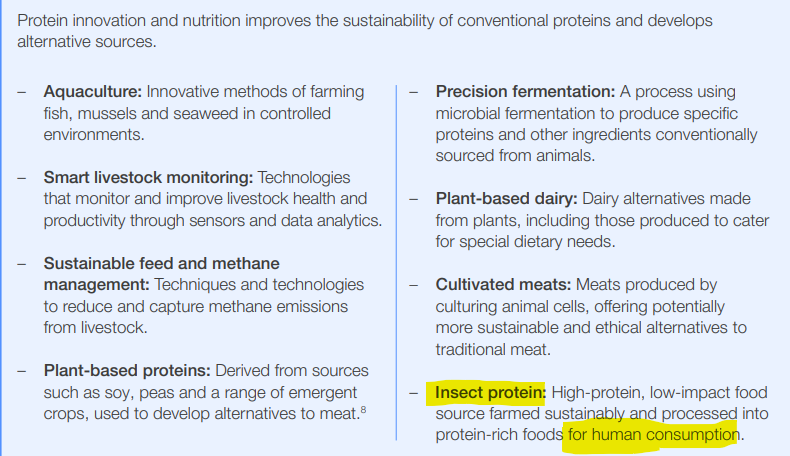
Last year, the WEF published a report entitled “Mainstreaming Food Innovation: A Roadmap for Stakeholders,” that highlighted insects as being rich in protein for human consumption.
“Insect protein: High-protein, low-impact food source farmed sustainably and processed into protein-rich foods for human consumption”
WEF, “Mainstreaming Food Innovation: A Roadmap for Stakeholders,” September 2024
According to the UN, “Novel alternative proteins, including novel plant-based foods, cultivated meat, and fermentation-derived products, could replace conventional ASF [Animal Source Foods], reducing GHG [Green House Gas] emissions, lowering land and water use and loss of biodiversity, but more research and investment is needed.”
The UN’s current goal is to adhere to the EAT-Lancet diet by 2050, which calls for a “50 per cent decrease in meat consumption, 100 per cent increase in nuts, vegetables, fruits and legumes).”
If you recall the WEF video “8 predictions for 2030,” the first prediction was “You’ll own nothing, and you’ll be happy” thanks to the circular economy
Another prediction was “You’ll eat much less meat. An occasional treat, not a staple. For the good of the environment and our health.”
The UN and the WEF are in lockstep when it comes the great reset agenda and Agenda 2030.
Transforming the global energy system
The fourth pathway the UN lays out continues with the theme of getting used to having less — this time by calling on countries to scale up their generation of renewable energy, like wind and solar power.
These intermittent and unreliable forms of energy are intended for us plebs to use.
“Transforming the energy system hinges on decarbonization, scaling renewable sources like solar and wind and improving efficiency“
UNEP, “A Future We Choose,” December 2025
Meanwhile, AI data centers are demanding over 30 gigawatts of energy generation — enough to power multiple small cities.
Nuclear power plants and small modular reactors are becoming all the rage to meet these data center energy demands.
According to the UN report, “The most significant energy transition progress occurs in power generation, with low-carbon sources, including solar photovoltaics, wind, and nuclear energy, projected to hold a much larger share in 2030 and 2050.“
At the same time, “fossil fuels will remain the dominant energy source by 2050.”
To top it all off, the UN concludes that you and I should “walk and cycle more” so we don’t feed “a climate crisis that is already sparking droughts, floods, superstorms and other calamities.”
Once again, every pathway is about influencing and modifying human behavior to accept unelected globalist policies.
Managing environmental systems
The UN loves to talk about the importance indigenous wisdom, but only when it comes to the environment — big pharma and Gates-backed WHO aren’t big fans of natural medicine.
According to the UN report, “Managing environmental systems in ways that enhance sustainability involves implementing nature-friendly solutions and incorporating Indigenous Peoples’ governance and care for living territories.”
The agenda here is to give nature a digital ID called Nature ID that will monitor all biodiversity with cameras, sensors, and artificial intelligence.
“Monitoring through the use of artificial intelligence can more effectively track the health of ecosystems”
UNEP, “A Future We Choose,” December 2025
Published in March 2025, a study by the UN Development Program (UNDP) called, “The case for Nature ID: How Digital Public Infrastructure can catalyze nature and climate action,” outlined how to digitally track, trace, and price biodiversity through Nature ID.
“By leveraging tools from multiple data sources such as satellite imagery, remote sensing technologies, and environmental monitoring stations, the system could detect trends and changes, allowing for timely interventions and serve as a platform for biodiversity monitoring at scale,” the study reads.
Then, “By integrating data on flora and fauna collected through sensors, camera traps, acoustic monitoring and citizen science initiatives, Nature ID would provide detailed assessments of biodiversity, supporting species identification and ecosystem health evaluations.”
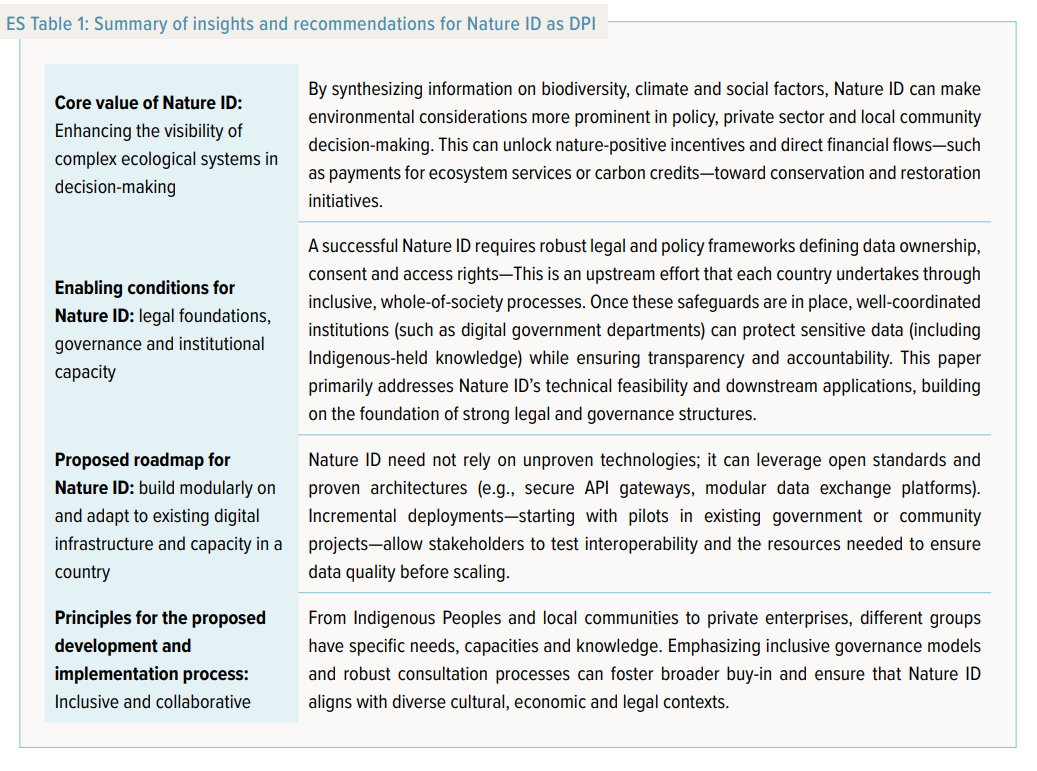
“By synthesizing information on biodiversity, climate and social factors, Nature ID can make environmental considerations more prominent in policy, private sector and local community
UNDP, The Case for Nature ID, March 2025
decision-making.
“This can unlock nature-positive incentives and direct financial flows—such
as payments for ecosystem services or carbon credits—toward conservation and restoration
initiatives“
Next, with all that data collected, it must be shared to determine what’s going on, who’s using it, and what its value is.
According to the UNDP study, “Linking economic activities to spatial environmental data would allow for the assessment of environmental footprints and support the development of sustainable resource management policies.
“By incorporating socio-economic data from tourism statistics, agricultural registries and industrial reports, the system would provide insights into how human activities interact with the environment at particular locations. This could enable users to leverage Nature ID to monitor how human activities–such as tourism, agriculture and industrial operations–impact ecosystems.“
From there, “Data sharing through Nature ID can serve as a platform for scaling and targeting climate and nature-positive finance, such as for rural lending programs, financing local initiatives, and biodiversity and carbon credit markets.”
The future that global institutions are choosing for us is one in which we the people have no control or say over what we can eat, what we can own, what types of energy we are allowed to consume, or what we can do with the land.
It’s not the future we choose; it’s a future that’s been chosen for us.
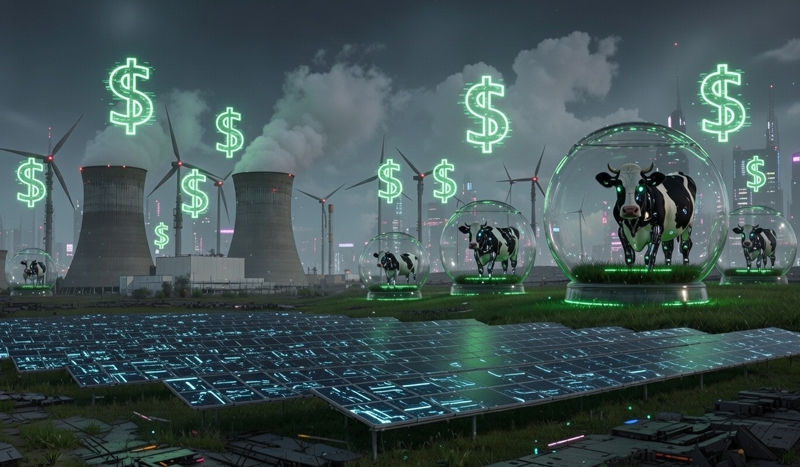
Image Source: AI generated with Grok